発祥の地で味わう冬の神事|2025年・上賀茂神社「すぐき奉納奉告祭」に行ってきました
投稿日: 2025年12月07日
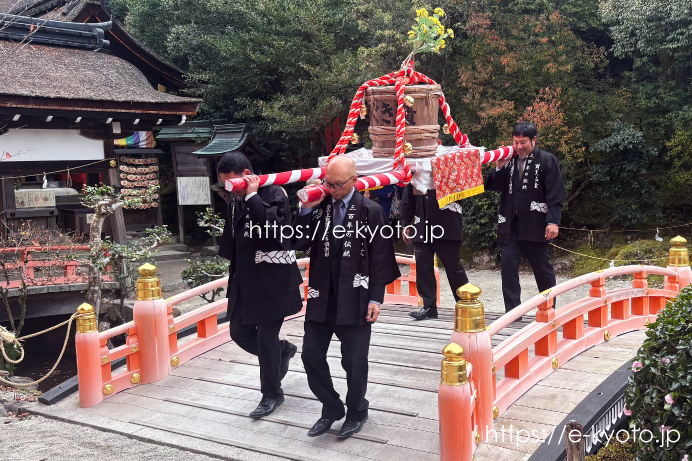
12月7日、今日は朝から上賀茂神社へ行ってきました。毎年12月初旬に行われる恒例行事「すぐき奉納奉告祭」を見るためです。
すぐきは、かぶらの一種である“すぐき菜”を漬けた京漬物。実はこのすぐき菜、もともと上賀茂神社の神職が境内で栽培したのが始まりで、すぐきの発祥地も上賀茂なんですよね。奉告祭では、JAの組織内で「すぐき」の栽培技術や伝統の継承を担う「京の上賀茂すぐき倶楽部」が、その年の初物を本殿にお供えし、感謝を伝える昔ながらの神事が行われます。
天気予報では「今日は少し寒さがマシ」と言っていましたが、正直あまり変わらず。朝の境内はしっかり冷え込んでいて、冬だなぁと実感しました。10時になると、一の鳥居からすぐきの入った樽(すぐき御輿)を担いだ行列がゆっくり進み始めます。まずは土屋(つちのや)で祓えが行われ、そのあと本殿へ。本殿では、厳かな雰囲気の中で神事が執り行われていました。
このすぐき御輿の行列を近くで見たくて、今日は少し早めに出かけたのですが、あらためて“上賀茂の冬の風物詩”にふさわしい行事だなと感じました。ちなみに渉渓園では、まだ紅葉がきれいに残っていました。冬の神事が行われている一方で、境内には秋の名残もあって、季節の移ろいを感じられる朝でした。
Experiencing a Winter Ritual at Its Birthplace
— The 2025 Suguki Offering Ceremony at Kamigamo Shrine
On December 7, I visited Kamigamo Shrine early in the morning to see the annual Suguki Hōnō Hōkokusai, a ceremony held every year in early December.
Suguki is a traditional Kyoto pickled vegetable made from a type of turnip called suguki-na. Interestingly, its origins trace back to Kamigamo Shrine itself—long ago, shrine priests cultivated suguki-na within the precincts, making Kamigamo the birthplace of suguki. During the ceremony, the “Kyoto Kamigamo Suguki Club,” a JA-affiliated group dedicated to preserving the cultivation techniques and traditions of suguki, offers the first harvest of the year to the main sanctuary in a time-honored Shinto ritual of gratitude.
The weather forecast had said it would be “a bit less cold today,” but honestly, it didn’t feel much different. The shrine grounds were crisp and chilly, unmistakably winter. At 10 a.m., a procession began advancing slowly from the First Torii Gate, carrying a barrel filled with suguki—known as the “Suguki Mikoshi.” The group first received purification at Tsuchinoya and then proceeded to the main sanctuary, where the ritual took place in a solemn and sacred atmosphere.
I headed out a little earlier than usual so I could see the suguki procession up close, and once again I felt how fitting this ceremony is as one of Kamigamo’s classic winter traditions. By the way, the autumn colors at Shōkeien Garden were still beautifully lingering. With a winter ritual taking place on one side of the shrine and the remnants of autumn glowing on the other, it was a morning that truly captured the transition of the seasons.